Types of Concrete Blocks | Complete Guide
Choosing the right type of concrete block affects the cost, structural strength and build speed of your project, yet many buyers only learn the difference between block types after running into a problem on site. This guide walks through the full range of concrete blocks used in Indian construction so you can specify the right one from the start.
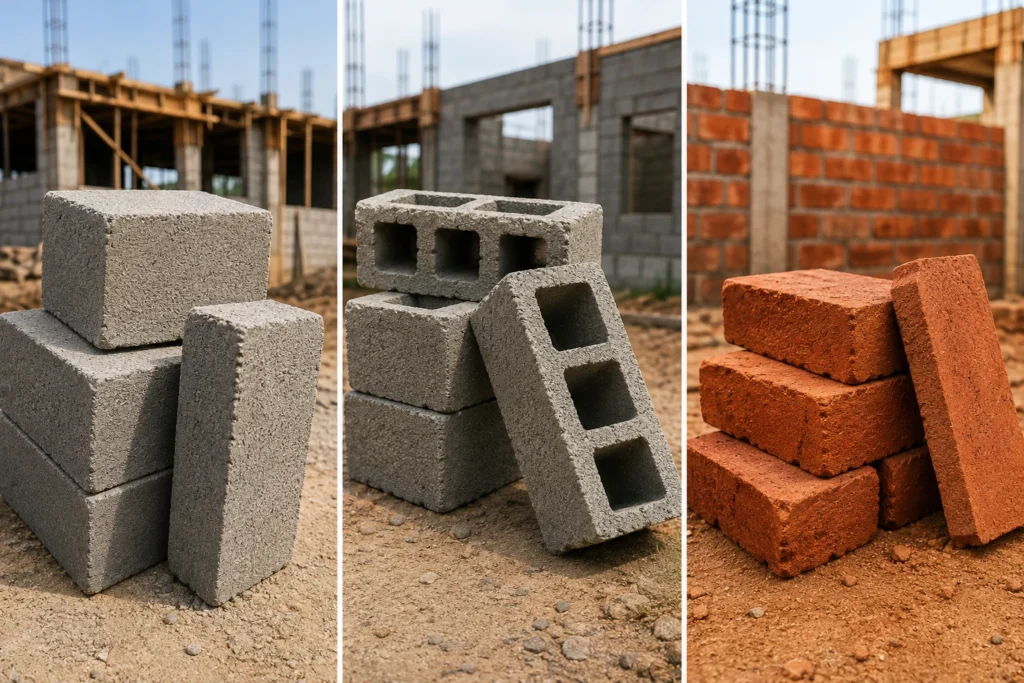
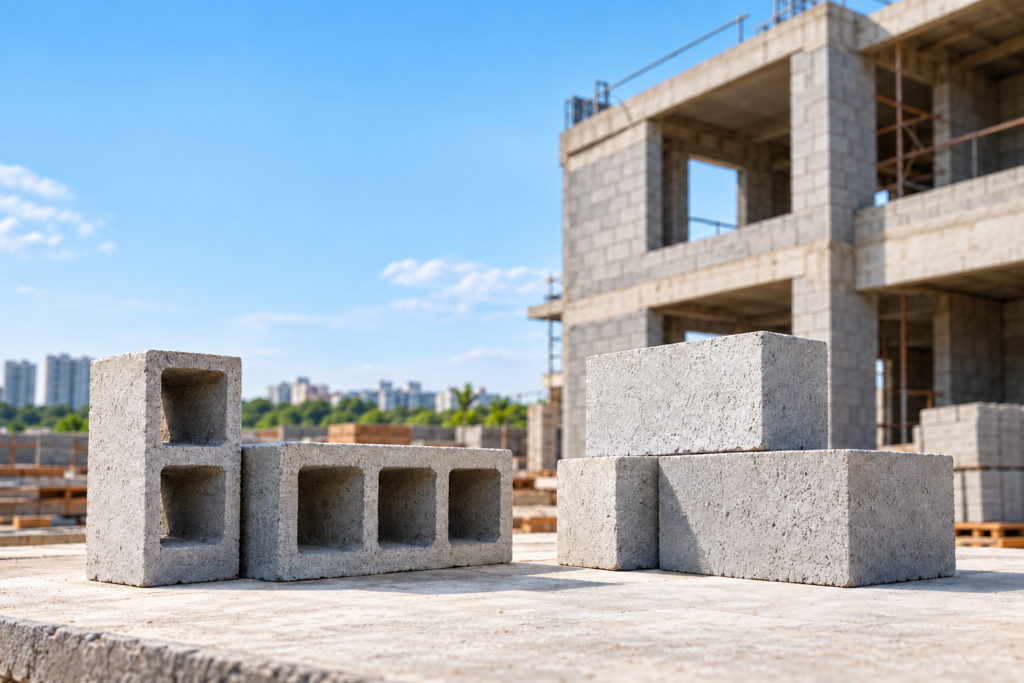
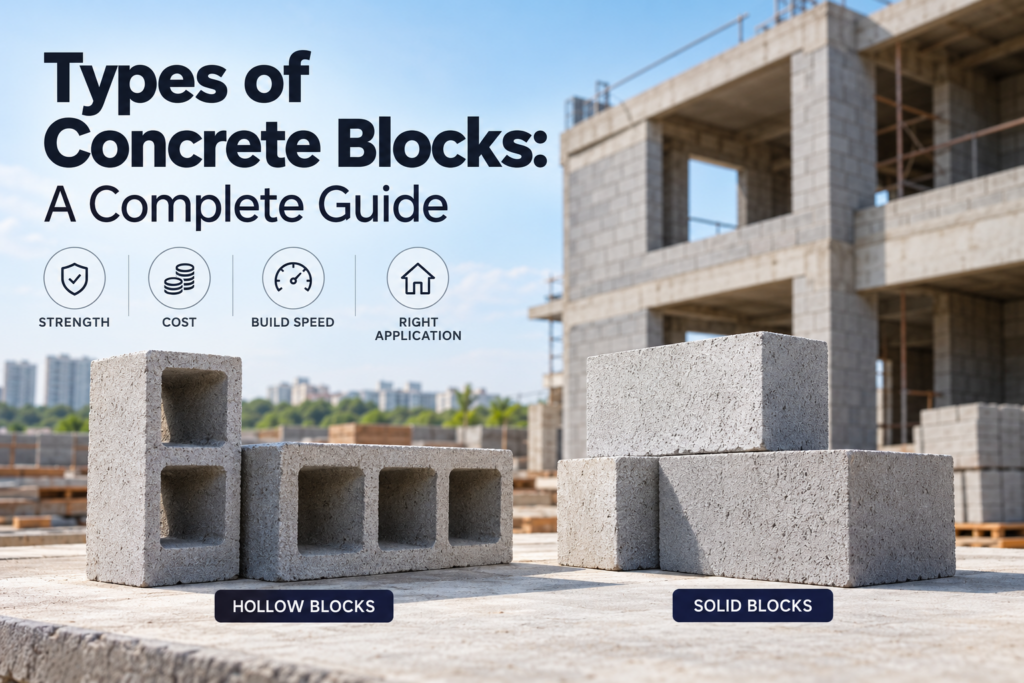
At a glance, concrete blocks fall into two primary categories: hollow blocks, which have one or more cavities and are used mainly for non-load-bearing partitions, and solid blocks, which are fully dense and used for load-bearing and external walls. Within each category, blocks are further classified by density grade and manufacturing method.
Two Primary Types of Concrete Blocks
There are two fundamental types of concrete blocks used in construction: Hollow Blocks and Solid Blocks. The distinction is based on the percentage of void space within the block. If the voids make up more than 25% of the block’s cross-sectional area, it is classified as a hollow block. If the voids are less than 25%, or absent entirely, the block is classified as solid. This single distinction drives most of the difference in strength, weight, and application between the two types.
Types of Hollow Concrete Blocks
Hollow concrete blocks are classified into three density grades under Indian standards, each suited to a different structural role.
Grade A hollow blocks: have a minimum density of 1,500 kg per cubic metre and are used for load-bearing walls. These are manufactured to a specific compressive strength of 4.0 to 5.0 N/mm² at 28 days and are strong enough for walls that carry structural loads, despite having voids.
Grade B hollow blocks: have a density below 1,500 kg per cubic metre and are also used for load-bearing applications, though generally in less demanding structural situations than Grade A.
Grade C hollow blocks: have a density greater than 1,000 kg per cubic metre and are used specifically for non-load-bearing walls, such as internal partitions and boundary walls that carry no structural weight.
Hollow blocks are also available with decorative facings, including fluted finishes, for applications where the block face remains visible and an architectural texture is wanted.

Types of Solid Concrete Blocks
Solid concrete blocks are the denser category, with a minimum density requirement of 1,800 kg per cubic metre and voids making up less than 25% of the cross-sectional area, if any voids are present at all. They are manufactured for a specific compressive strength range of 4.0 to 7.5 N/mm² depending on grade, and are the standard choice for load-bearing external walls and compound walls.
Within solid blocks, a further category exists in cellular or lightweight aerated blocks, sometimes grouped separately as they use fly ash and aeration agents to reduce weight while retaining reasonable strength. These lightweight variants sit closer to AAC block territory in terms of application and are chosen when weight reduction matters more than maximum compressive strength.
A separate application of solid blocks is precast paving units, made in various shapes specifically for exterior ground paving such as sidewalks, parking lots, driveways, and industrial floors, where load-bearing wall strength is not the requirement but surface durability and interlocking stability are.
Methods of Block Manufacturing
Compressed Solid Blocks
Compressed blocks are manufactured using hydraulic or mechanical pressing, which compacts the cement, aggregate, and water mixture under high pressure inside a mould. This method produces blocks with superior density, dimensional accuracy, and compressive strength compared to blocks that are simply cast and vibrated. Reputable manufacturers use hydraulic pressing specifically because it produces a more consistent, higher-strength product suitable for structural applications.
Aggregate-Line Blocks
Aggregate-line manufacturing refers to a continuous production process where aggregate, cement, and water are mixed and fed through an automated line that casts, vibrates, and cures blocks in a repeatable sequence. This method allows for higher production volumes with consistent quality control at each stage, since the mix proportions and vibration time are mechanically controlled rather than manually adjusted for each batch.
Comparison Table: Concrete Block Types and Manufacturing Methods
| Block Type | Strength | Weight | Best Use | Relative Cost |
|---|---|---|---|---|
| Hollow Grade A | 4.0 to 5.0 N/mm² | Medium | Load-bearing walls | Medium |
| Hollow Grade C | Lower, non-structural rated | Light | Internal partitions | Low to medium |
| Solid Block | 4.0 to 7.5 N/mm² | Heavy | External, load-bearing, compound walls | Medium to high |
| Cellular / Lightweight Aerated | 3.0 to 5.0 N/mm² | Very light | Thermal comfort, partitions | Medium to high |
| Compressed (Hydraulic) | Higher end of grade range | Heavy, dense | Structural applications requiring maximum reliability | Medium to high |
| Aggregate-Line Manufactured | Consistent within grade | Varies by design | High-volume structural and general use | Medium |
How to Choose the Right Type of Concrete Block
Start with the structural role of the wall. If it carries load from a slab or beam above, or forms an external or compound wall exposed to weather, choose a solid block or a Grade A hollow block meeting the required compressive strength. If the wall is a purely internal, non-load-bearing partition, a Grade C hollow block or a lightweight aerated block offers a more efficient and economical choice.
Next, verify the manufacturing method. Ask whether the blocks are hydraulic-pressed or cast on an aggregate-line, and request compressive strength test certificates regardless of which method was used. The classification on paper only matters if the manufacturer’s actual production quality matches it.
Finally, match the block to your budget and project timeline. Solid blocks generally cost more per unit but require less plastering and labour time, which often balances out the total project cost compared to lighter, cheaper block types that need more careful handling and finishing.
SDM Concrete manufactures both hollow and solid concrete blocks in-house at our facility in Rajajinagar, Bangalore, using hydraulic pressing and controlled water curing for a minimum of 21 days before dispatch. Every production batch is tested in our own quality lab, with third-party test reports available on request. Because we manufacture rather than resell, the block quality that leaves our facility is exactly what arrives at your site, with no variability introduced by intermediaries.
Whether your project needs Grade A solid blocks for a load-bearing external wall or Grade C hollow blocks for internal partitions, our team can recommend the right specification for your structural requirements and budget.
Frequently Asked Questions
Turnkey construction means a single company handles every stage of a building project, from design and approvals through construction and finishing, delivering a complete, move-in ready property under one contract.
What is the best type of block?
There is no single best type. Solid blocks are best for load-bearing and external walls, while hollow blocks are best for internal, non-load-bearing partitions. The right choice depends entirely on the wall’s structural role.
What are the most common types of concrete blocks?
The most common types are solid concrete blocks and hollow concrete blocks, with hollow blocks further classified into Grade A, B, and C based on density and load-bearing suitability.
What is the difference between solid and hollow concrete blocks?
Solid blocks have less than 25% void space and are denser and stronger, used for load-bearing and external walls. Hollow blocks have more than 25% void space, are lighter, and are typically used for internal partitions.
What is the strongest concrete block?
Solid concrete blocks manufactured to Grade A specifications using hydraulic pressing achieve the highest compressive strength, typically up to 7.5 N/mm² or higher.
Which concrete block type is most cost-effective?
Hollow Grade C blocks are the most cost-effective for non-structural internal partitions. For structural walls, solid blocks are often more cost-effective overall once labour and plastering savings are included, despite a higher per-unit price.
Can concrete blocks be used for load-bearing walls?
Yes. Solid concrete blocks and Grade A hollow blocks meeting the appropriate compressive strength standards are both suitable for load-bearing walls.
Which type of concrete block is best for construction?
For most residential and commercial structural walls, solid concrete blocks offer the best combination of strength, durability, and construction speed.
What are concrete blocks used for?
Concrete blocks are used for load-bearing walls, external walls, compound and boundary walls, internal partitions, and in solid block form, for exterior paving applications such as driveways and walkways.
How much do concrete blocks cost?
Concrete block prices in 2026 range from approximately Rs. 28 to Rs. 60 per piece depending on size and type, with 6 inch solid blocks typically priced between Rs. 36 and Rs. 48.
How do I choose the right concrete block for construction?
Match the block type to the wall’s structural role first, verify the manufacturer’s compressive strength test certificates, and then balance cost against labour and plastering savings for your specific project.
Need Help Choosing the Right Concrete Block Type for Your Project?
Get expert guidance from SDM to choose the right block type based on your construction requirements, application, strength and budget. Get IS 2185-certified blocks straight from our Bangalore facility.