Construction Raw Material Crisis in Bangalore
Builders and homeowners across Bangalore have been dealing with rising costs and unexpected delays over the past several months, and the cause traces back to a genuine construction raw material shortage affecting the city and its surrounding districts.
As of September 2026: Bangalore is facing a construction raw material shortage driven primarily by restricted sand and aggregate supply from neighbouring Tamil Nadu, tightened quarrying enforcement around the city, and steady cost inflation in cement and steel. M-sand and aggregate prices have risen sharply in recent months, and several public works projects have been paused as a direct result.
This article explains what is driving the shortage, how much material costs have actually moved, and what homeowners and builders can do to protect their projects.
What Is the Construction Raw Material Crisis in Bangalore?
The crisis refers to a sustained shortage and price surge in key building materials, particularly sand, aggregate, and crushed stone, affecting Bengaluru Urban, Bengaluru Rural, Bengaluru South, Tumakuru, Kolar, and Chikkaballapur districts through 2026. Unlike a routine seasonal price fluctuation, this shortage has been severe enough to halt Greater Bengaluru Authority works including road construction and asphalting, and has affected thousands of labourers dependent on quarrying and construction activity.
Which Materials Are Affected
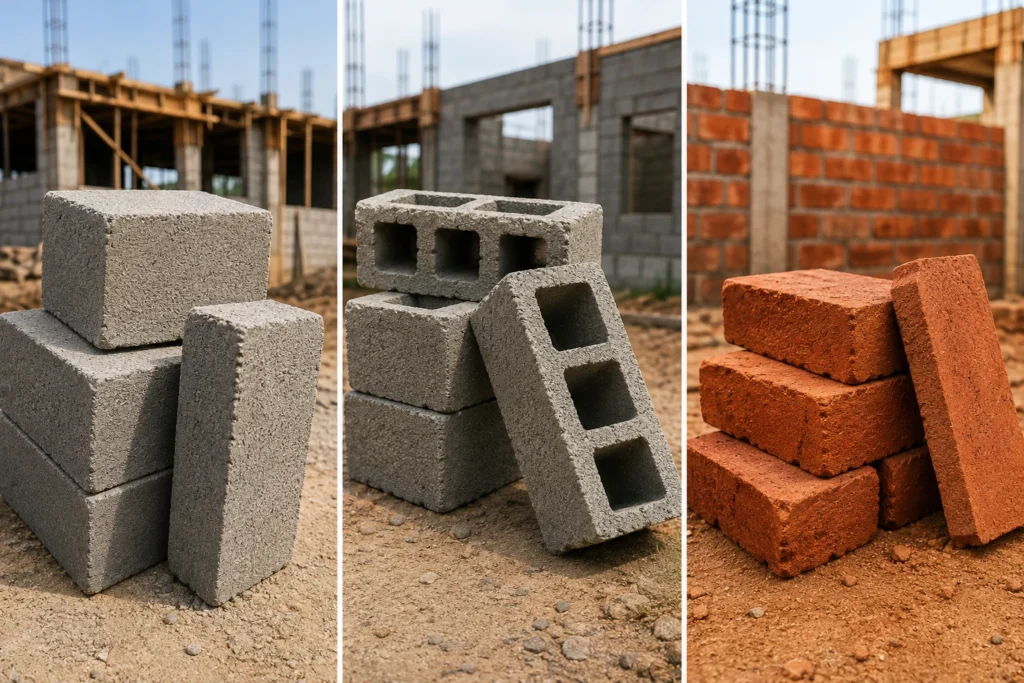
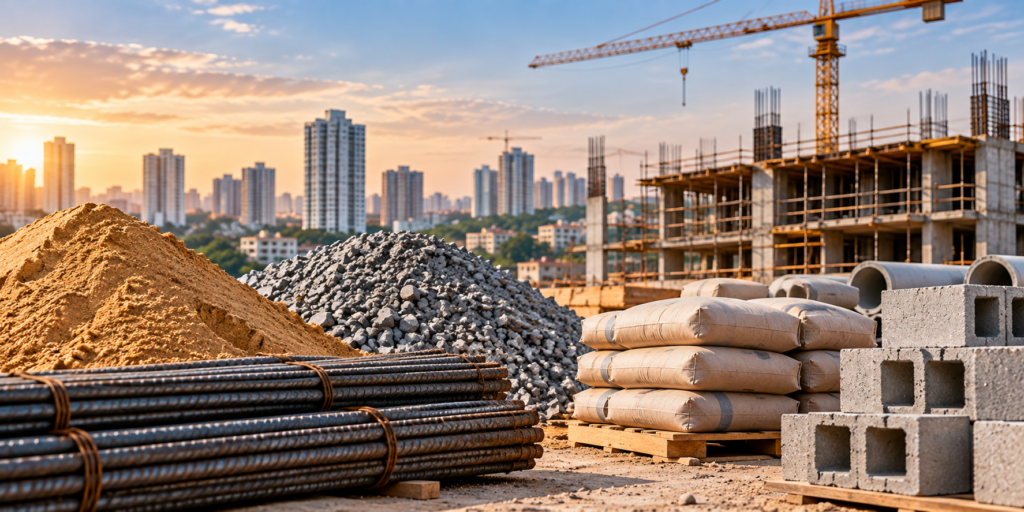
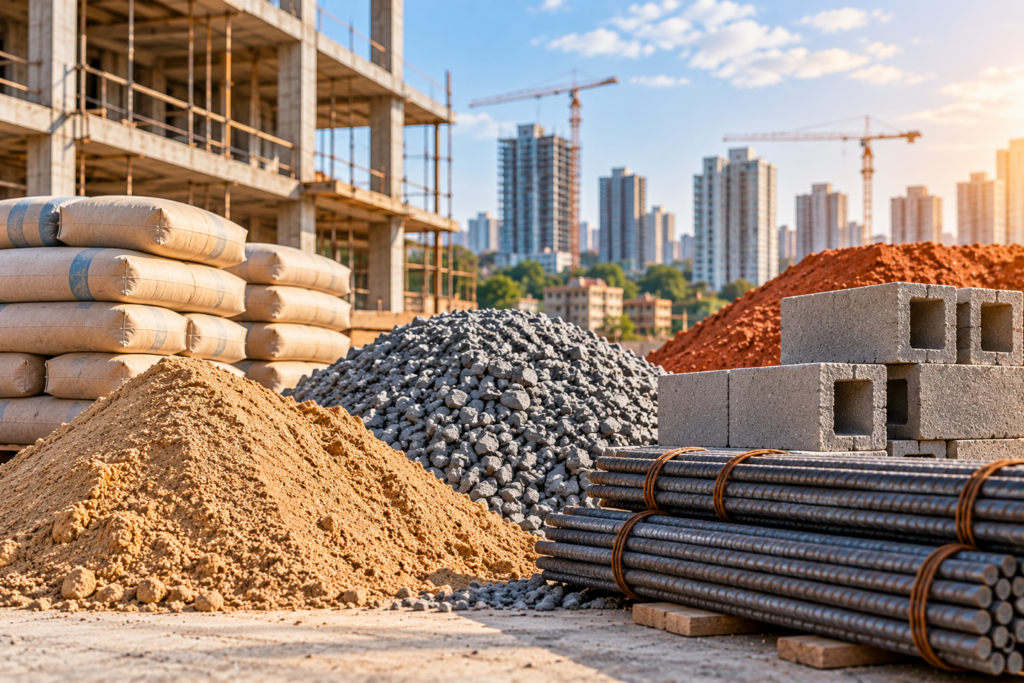
The materials most affected are M-sand, P-sand, and aggregate, along with size stones and boulders used in foundation and road work. Cement blocks have also become costlier as a knock-on effect, rising by approximately Rs. 3 per block in recent months. Cement and steel prices, while not facing an acute shortage in the same way, have continued a steady upward trend through 2026.
How This Differs from a Normal Price Fluctuation
Construction material prices move seasonally every year, typically rising after the monsoon as building activity picks up. What makes the current situation different is the scale and suddenness of the sand and aggregate price increase, driven by a specific supply disruption rather than routine seasonal demand, and its knock-on effect on cement block pricing and project timelines across a wide geographic area.
Key Causes Behind the Construction Materials Shortage
Sand Mining Restrictions and Interstate Supply Disruption
A major driver of the current shortage traces back to Tamil Nadu’s decision to restrict the supply of locally produced construction materials to other states. Crushers around Hosur, which previously supplied close to 500 truckloads daily to Electronic City, Anekal, Sarjapur, HSR Layout, Marathahalli, Varthur, Whitefield, and Bannerghatta, have seen that supply chain disrupted. Demand has since shifted to crushers around Madapattana, Dodderi, Lakshmipura, Gollahalli, Chikkanahalli, Bidadi, Ramanagara, Anekal, Harohalli, and Nelamangala, but these alternate sources have not been able to fully absorb the gap.
Cement and Steel Price Volatility
Cement prices in Bangalore in 2026 range from approximately Rs. 340 to Rs. 490 per 50kg bag depending on brand and grade, while TMT steel prices have moved between Rs. 55,000 and Rs. 72,000 per metric tonne through the year. Both materials have followed a general upward trend, driven by input cost pressures and steady demand from the construction sector nationally.
Supply Chain and Logistics Disruptions
Diesel costs have added meaningfully to transportation expenses for heavy materials like sand, aggregate, and cement, which must be moved by dedicated trucks from quarries and plants to construction sites. Rising royalty charges collected by crushers, now around Rs. 120 per tonne, have also fed through into final material pricing.
Rising Demand from Real Estate Growth in Bangalore
Bangalore’s continuing IT and ITES-driven housing demand has kept construction activity high, which sustains pressure on material supply even during periods when sourcing disruptions are not present. This underlying demand means any supply-side shock, like the current sand restriction, has an outsized effect on prices.
Regulatory and Policy Factors
Karnataka’s ongoing enforcement against illegal quarrying, alongside the interstate supply restriction from Tamil Nadu, has periodically tightened aggregate availability even as royalty and GST compliance has improved transparency in the sector.
Impact on Construction and Building Materials Costs
Cost Increase by Material
| Material | Pre-Crisis Price (Approx.) | Current Price, 2026 | Change |
|---|---|---|---|
| M-Sand (per tonne, double washed) | Rs. 725 to Rs. 750 | Rs. 900 to Rs. 1,000 | +20% to +30% |
| Aggregate (per tonne) | Rs. 600 to Rs. 650 | Rs. 750 to Rs. 900 | +20% to +30% |
| 1,000 Size Stones | Rs. 23,000 | Rs. 26,500 | +15% |
| Boulders (six-wheel truckload) | Rs. 8,000 | Rs. 10,500 | +31% |
| Cement (per 50kg bag) | Rs. 320 to Rs. 380 | Rs. 340 to Rs. 490 | +6% to +10% |
| TMT Steel (per tonne) | Rs. 55,000 to Rs. 62,000 | Rs. 58,000 to Rs. 72,000 | +5% to +12% |
Note: The material prices shown above are indicative market rates based on recent Bangalore market reporting and broader 2026 market ranges for Karnataka. Actual prices may vary depending on supplier, location, quantity, quality, and prevailing market conditions. Please confirm the latest rates with your supplier before finalising your project budget, as prices are subject to change.
Effect on Overall Construction Cost Per Square Foot
The combined effect of these increases has contributed to an estimated 8% to 10% rise in overall construction cost per square foot in Bangalore through 2026, driven by a combination of the sand and aggregate spike, steady cement and steel inflation, and rising skilled labour wages in the city’s competitive job market.
Project Delays and Timeline Impact
Beyond cost, the shortage has caused real timeline disruption. Several public infrastructure works under the Greater Bengaluru Authority have been paused due to material unavailability, and private residential projects have reported delays in foundation and structural work stages where sand and aggregate are needed in bulk quantities.
Impact on Homeowners vs Builders and Contractors
Homeowners building independently and locking in a fixed-price contract before the recent price spike are more insulated from these increases, since the cost burden falls on the contractor. Builders and contractors working on tighter margins, or those who quoted projects before the shortage began, are absorbing much of the immediate cost pressure and facing difficult decisions about whether to pass on increases to clients mid-project.
How the Crisis Is Affecting Construction Material Suppliers
Supply Inconsistency and Stock Shortages
Smaller suppliers with limited stock reserves or single-source dependency on the disrupted Hosur crusher belt have been hit hardest, facing intermittent stock shortages and unpredictable delivery timelines. Larger suppliers with diversified sourcing across multiple crusher zones have generally weathered the disruption with fewer delivery interruptions.
Why Sourcing from Reliable Local Suppliers Matters More Now
In a tightened supply environment, a supplier’s ability to maintain consistent stock and honour delivery commitments becomes far more valuable than marginal price differences. Contractors working with established, diversified suppliers have generally avoided the worst of the delays affecting the broader market.
How to Find Dependable Construction Material Suppliers Near You
Prioritise suppliers with their own production or quarrying capacity rather than pure resellers, ask specifically about their current stock levels and sourcing diversity before committing to a bulk order, and confirm delivery timelines in writing given the current volatility in the market.
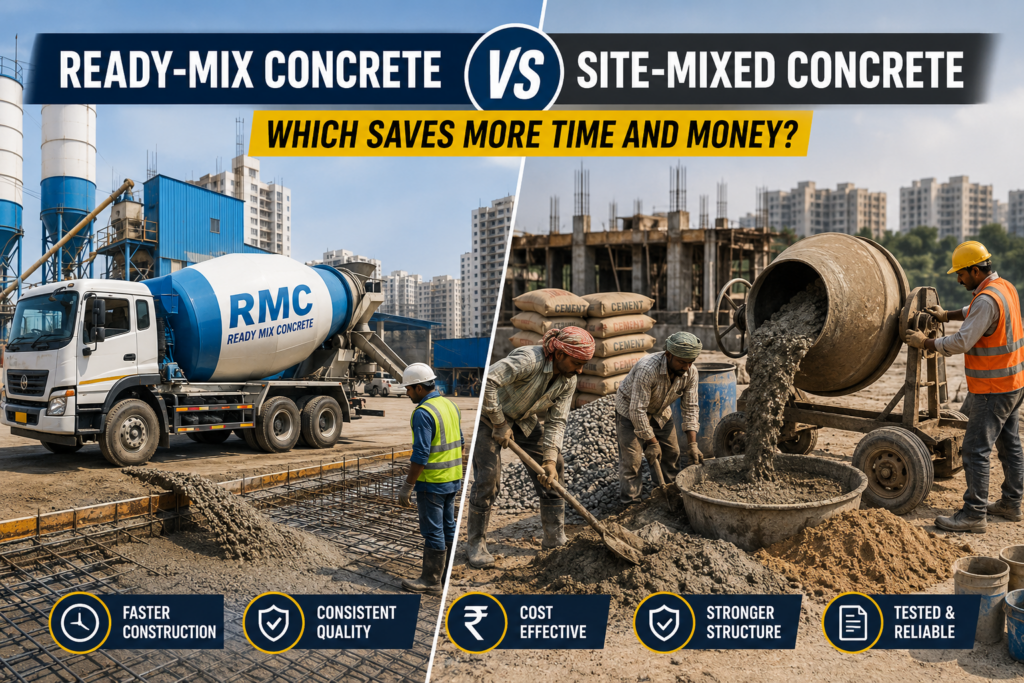
SDM Concrete operates its own in-house production for ready mix concrete, solid and hollow blocks, paver blocks, and kerb stones from our facility in Rajajinagar, Bangalore, which has helped shield our supply chain from some of the disruption affecting resellers dependent entirely on third-party crusher output.
Bulk Procurement and Advance Planning
Companies with the storage capacity to do so are increasingly placing bulk orders for cement and steel ahead of anticipated price increases, and scheduling sand and aggregate deliveries further in advance to avoid last-minute unavailability.
Alternative and Substitute Materials
Fly ash bricks and AAC blocks are seeing increased interest as substitutes in applications where they are structurally appropriate, since their supply chains are less directly affected by the sand and aggregate crunch than solid concrete blocks and site-mixed concrete.
Vendor Diversification
Contractors are actively working to diversify their supplier base across multiple crusher zones and material sources rather than depending on a single vendor, reducing their exposure to any one region’s supply disruption.
Fixed-Cost and Turnkey Contracts to Protect Against Volatility
Clients entering fixed-price turnkey construction contracts are better protected against these material price swings, since the contractor absorbs the risk of input cost changes within an agreed total price. This is one of the practical reasons turnkey construction has grown in popularity during periods of material cost volatility.
Tips for Homeowners and Builders During the Material Crisis
- Lock in prices early through advance orders or a fixed-price contract where possible
- Choose contractors with strong, diversified supplier networks rather than single-source dependency
- Consider alternative building construction materials such as fly ash bricks or AAC blocks where structurally appropriate
- Build in a budget contingency of at least 8% to 10% to absorb potential further cost increases
- Avoid last-minute bulk material orders during known shortage periods, and plan procurement further ahead than usual
How SDM Concrete Is Managing the Raw Material Crisis
Supplier Relationships and Sourcing Strategy
SDM Concrete’s in-house production facility for ready mix concrete and concrete blocks reduces our dependency on the third-party crusher and sand supply chains most affected by the current disruption. Where we do source externally, we maintain relationships across multiple supply zones rather than relying on any single source.
Price Stability Commitments for Clients
For clients engaged under a turnkey or fixed-price contract with SDM Sri Samrudhi, material cost volatility during the crisis is absorbed within the agreed project price, rather than being passed on as a mid-project increase.
Working with Our Team During This Period
If you are planning a construction project in Bangalore during this period of material cost pressure, our team can walk you through current material availability, realistic budget planning given the present market conditions, and options for locking in costs through a fixed-price contract.
Frequently Asked Questions
Turnkey construction means a single company handles every stage of a building project, from design and approvals through construction and finishing, delivering a complete, move-in ready property under one contract.
Why is there a construction material shortage in Bangalore?
The current shortage is driven primarily by Tamil Nadu’s restriction on supplying construction materials to other states, which disrupted the crusher belt around Hosur that previously served large parts of Bangalore, combined with ongoing quarrying enforcement and steady cement and steel price inflation.
Which construction materials are most affected by the crisis?
M-sand, P-sand, aggregate, and size stones have seen the sharpest price increases and supply disruption. Cement blocks have also become costlier as a direct knock-on effect.
How much have cement and steel prices increased in 2026?
Cement prices in Bangalore range from roughly Rs. 340 to Rs. 490 per 50kg bag in 2026, and TMT steel ranges from Rs. 55,000 to Rs. 72,000 per tonne, both reflecting a steady upward trend through the year.
How can I find reliable construction material suppliers near me?
Prioritise suppliers with their own production or quarrying capacity, diversified sourcing across multiple regions, and a track record of honouring delivery timelines, particularly important during the current period of supply disruption.
Will construction material prices stabilize soon?
Prices may ease as alternate crusher sources around Bidadi, Ramanagara, Anekal, and Nelamangala scale up to absorb demand previously served by the Hosur belt, but the timeline for full stabilisation is uncertain and depends on how the interstate supply situation develops.
How does the raw material crisis affect construction timelines?
Projects requiring bulk sand and aggregate for foundation and structural work have faced the most direct delays. Fixed-price and turnkey contracts generally offer better timeline protection since the contractor manages procurement risk.
Looking for construction raw material suppliers in Bangalore?
Connect with SDM for reliable sourcing and construction material solutions tailored to your project requirements.